Poorly positioned logos can make custom lanyards look unprofessional, weaken brand visibility, and waste bulk orders. Clear placement specifications help prevent costly production mistakes.
To specify logo placement on custom lanyards, define the logo's position, orientation, size, printing direction, repetition, and distance from attachments. Provide a vector artwork file and an annotated design proof to help your custom lanyard manufacturer reproduce the intended layout accurately.
Whether you are ordering promotional lanyards, corporate ID lanyards, or branded event accessories, these details can make a significant difference in the final product.
1. Where Should You Place a Logo on a Custom Lanyard?
Logo position is one of the first decisions when developing custom branded lanyards. The placement determines how easily people can recognize your brand when wearing the lanyard, displaying an ID badge, or carrying promotional merchandise.
Common logo placement options include the front-facing side, both sides, and repeated patterns along the strap. A single centered logo creates a clean and minimal appearance, making it suitable for corporate identification and professional events. Repeated logos, on the other hand, provide more continuous brand exposure and are frequently used for promotional lanyards and trade show giveaways.
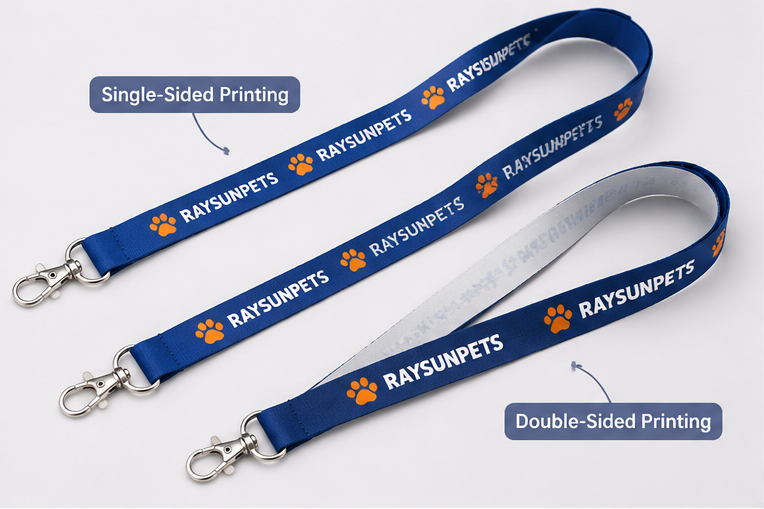
You should also consider how the lanyard will be worn. If the strap naturally twists or folds during everyday use, a logo placed in only one section may not always remain visible. For businesses that prioritize brand recognition, distributing the logo across multiple sections can create a more consistent appearance.
When working with a custom lanyard manufacturer, specify the exact placement using a layout drawing. Identify the front side, back side, center area, and any sections that should remain free of printing. Avoid relying only on verbal descriptions such as "put the logo in the middle."
For B2B buyers ordering wholesale custom lanyards, providing a clear placement reference helps reduce misunderstandings during sampling and bulk production. It also makes it easier to compare different suppliers because everyone is working from the same design requirements.
2. How Should You Specify Logo Size, Orientation, and Repetition?
After deciding where the logo should appear, the next step is defining its size and orientation. These specifications influence readability, visual balance, and the overall appearance of custom printed lanyards.
Start by considering the width of the lanyard strap. Common lanyard widths include 10 mm, 15 mm, 20 mm, and 25 mm, although available dimensions depend on the supplier and product design. A logo that looks clear on a 25 mm strap may become difficult to recognize when scaled down for a narrower version.
The logo should remain proportional and readable without overwhelming the strap. Avoid placing important text too close to the edges, where it may appear crowded or become less visible because of stitching or finishing.
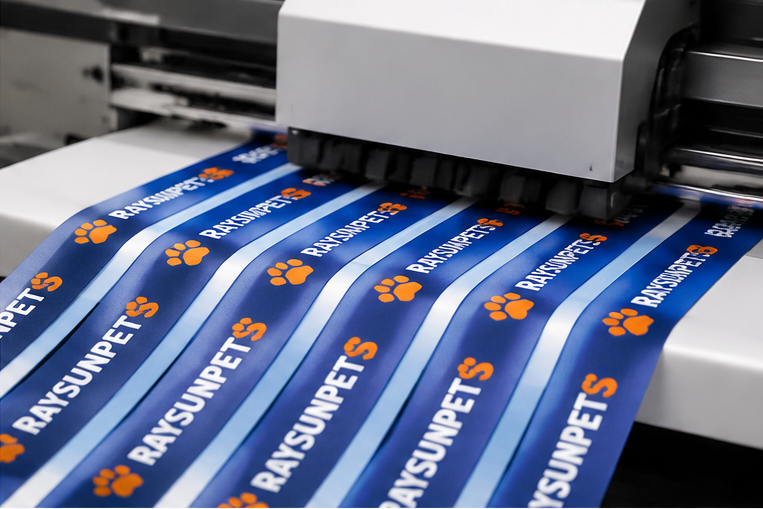
Orientation is equally important. Buyers should specify whether the logo should read from left to right when the lanyard is worn, whether it should face outward on both hanging sections, and whether the design should repeat in one direction or alternate.
For example, a company ordering 20 mm custom polyester lanyards may request a repeated horizontal logo pattern on both visible strap sections. Another buyer may prefer one larger logo positioned near the center for a simpler corporate appearance.
Repetition spacing should also be defined. If logos are repeated too closely, the design may look crowded. If the gaps are too large, brand visibility may become inconsistent.
A professional OEM lanyard supplier should receive clear artwork and placement specifications before preparing the production proof. For large wholesale orders, reviewing these details during sampling helps ensure that the approved design can be reproduced consistently across the order.
3. How Do Printing Methods and Lanyard Materials Affect Logo Placement?
Logo placement cannot be planned independently of printing methods and strap materials. Different production techniques create different visual effects, and the available options may influence how detailed artwork can be reproduced.
Dye sublimation printing is commonly used for polyester lanyards, particularly when buyers need full-color graphics, gradients, detailed logos, or repeated patterns. The artwork is transferred into the polyester material through heat, making it suitable for designs that require extensive color coverage.
Screen printing is another option for certain lanyard designs, especially when the artwork uses a limited number of solid colors. It can be appropriate for simpler logos and promotional applications. However, buyers should discuss the design requirements with their supplier because printing suitability depends on the material, artwork, and production process.
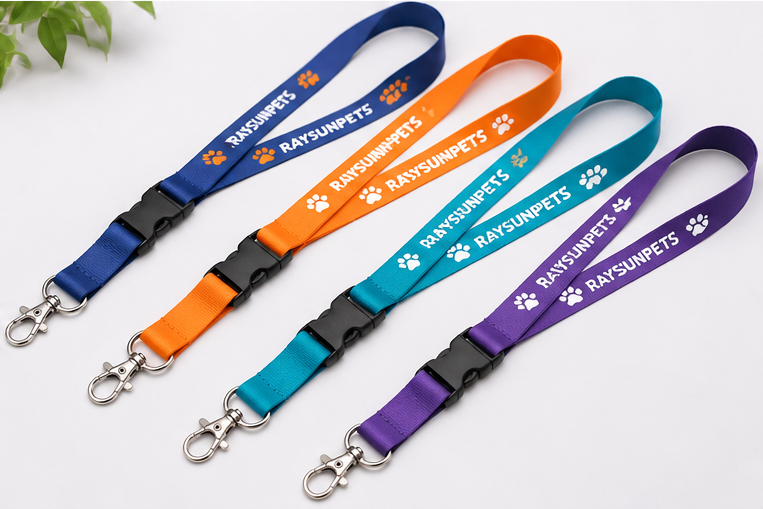
Material selection also matters. Polyester is widely used for custom printed lanyards, while other options may include tubular polyester, nylon, or different specialized strap constructions. Each material can have different surface characteristics that influence the appearance of printed artwork.
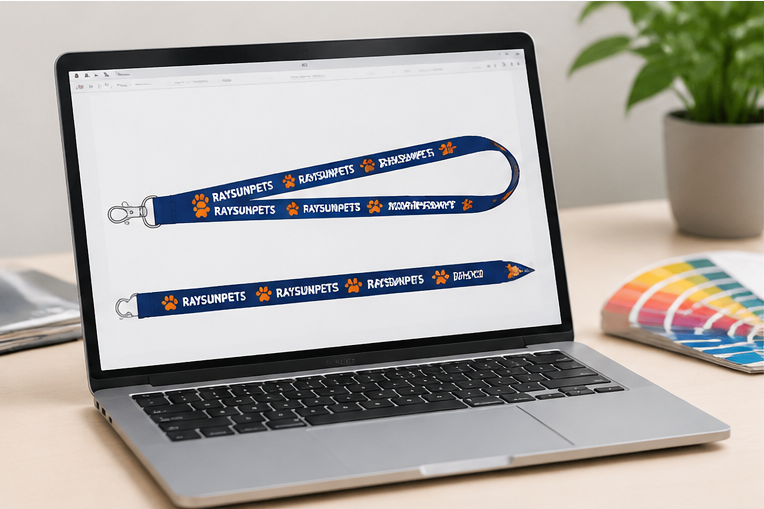
Before confirming production, provide your supplier with a high-resolution logo file. Vector formats such as AI, EPS, and editable PDF are generally preferable because they allow artwork to be scaled without losing clarity. If you only have a raster image, ask whether its resolution is sufficient for the intended printing size.
For B2B buyers sourcing custom logo lanyards, it is important to review an actual production sample or a reliable print proof. Do not assume that a logo will look identical across different materials and printing methods.
Discuss the printing technique, strap material, logo dimensions, and color requirements together. This gives your custom lanyard manufacturer a clearer understanding of the intended result and helps prevent avoidable artwork revisions.
4. What Should You Include in a Custom Lanyard Logo Placement Specification?
A complete logo placement specification helps your manufacturer understand exactly what needs to be produced. It also creates a shared reference for the buyer, designer, supplier, and production team throughout the order process.
Start with the basic product information, including lanyard width, material, strap color, attachment type, and printing method. Then provide the logo artwork and identify where each design element should appear.
Your placement instructions should cover several important details:
- Logo position: Specify whether the logo appears in the center, near the attachment, or repeatedly along the strap.
- Logo size: Provide the intended width and height, together with any required proportions.
- Orientation: Explain how the logo should face when the lanyard is worn.
- Printing sides: Confirm whether printing is required on one side or both sides.
- Repetition and spacing: Define the distance between repeated logos and the preferred pattern.
- Color requirements: Provide brand color references, such as Pantone values where applicable.
- Hardware clearance: Identify areas near buckles, clips, stitching, and other attachments where important artwork should not be placed.
An annotated design proof is particularly useful. Instead of sending only a logo file, prepare a simple layout showing the strap dimensions, logo position, printing direction, and attachment location. This reduces the possibility of different interpretations during production.
Before approving a bulk order, carefully check the supplier's final artwork proof. Confirm that the logo is correctly positioned, the text is readable, the colors are acceptable, and the attachment orientation matches your requirements.
For wholesalers, distributors, promotional product companies, and private-label brands, a standardized specification also makes repeat orders easier. When the same lanyard design needs to be reordered, the approved artwork and production details provide a reference for future purchasing.
Choosing an experienced custom lanyard manufacturer is therefore not just about comparing unit prices. Communication, artwork review, sampling, material options, and production consistency are all important factors when evaluating an OEM lanyard supplier.
A clear logo placement specification helps ensure that every custom lanyard reflects your brand consistently and professionally.