You're organizing an event and need medals, but the options are overwhelming. You're terrified of receiving a box of cheap, flimsy medals that arrive late and tarnish your event's reputation.
Before ordering, you must confirm the medal's size, weight, material, plating finish, and design complexity (2D vs. 3D). Also, finalize the ribbon's width, printing method, and attachment style, and get a guaranteed production and shipping timeline from your supplier.
As a product design consultant, I've seen the panic in an event organizer's eyes when their medals aren't what they envisioned. A medal isn't just a prize; it's a physical memento of an achievement, something a recipient will keep for a lifetime. Getting it right is crucial. The difference between a cherished keepsake and a piece of junk metal comes down to a few key specifications that you need to lock in with your manufacturer before you pay the deposit. Let's walk through the checklist I use with all my clients.
How Do You Choose the Right Size and Material?
You've approved a design but have no idea if the final medal will feel substantial or like a cheap token. A lightweight, flimsy medal can undermine the entire achievement it's meant to celebrate.
For a premium feel, confirm a diameter of at least 60-70mm and a thickness of 3-4mm. Specify zinc alloy as the material; its weight and ability to hold detail offer the best balance of quality and cost for most events.
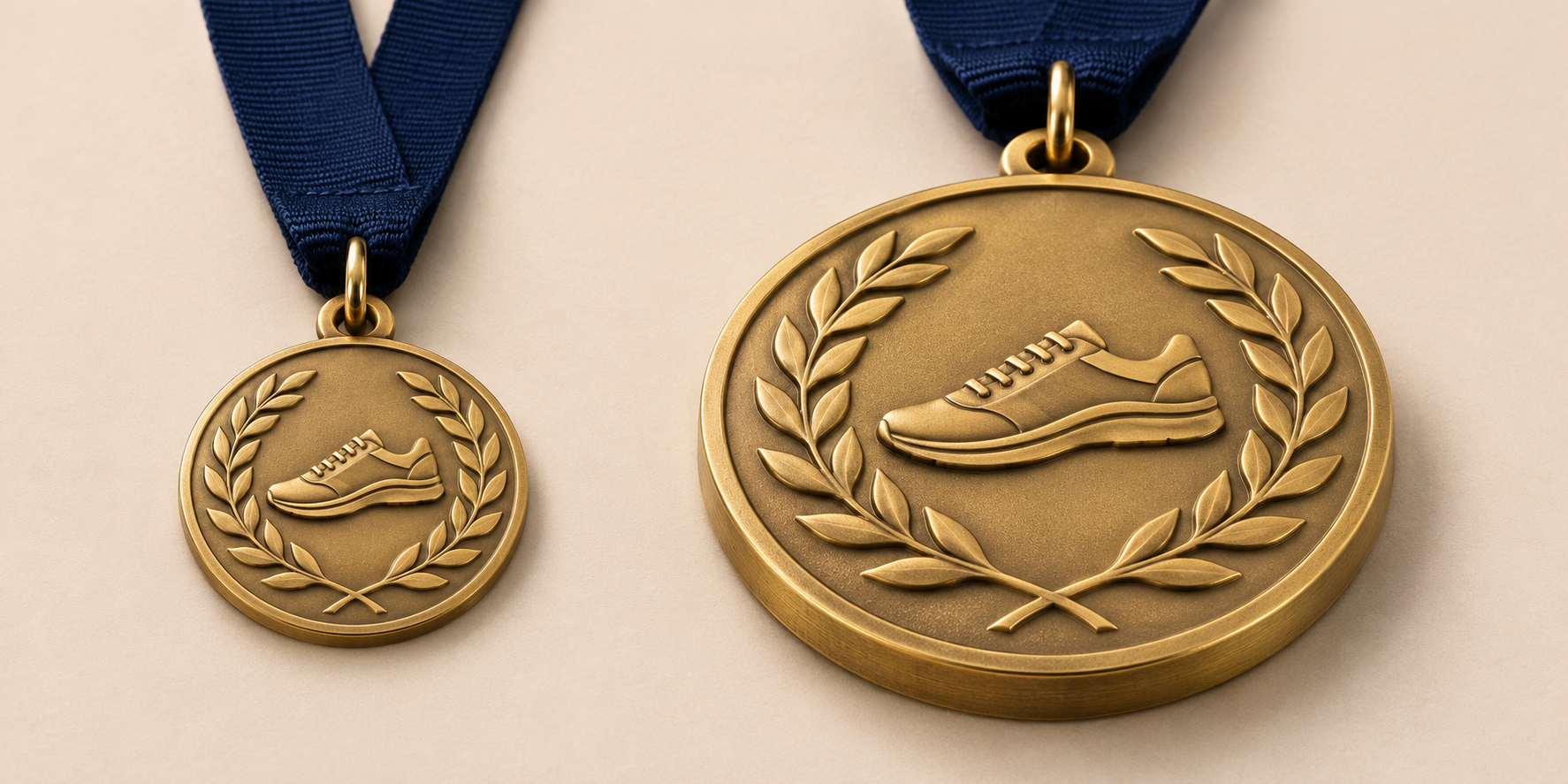
The physical feel of a medal is just as important as its appearance. When you hand a medal to a winner, you want them to feel its weight. That heft translates directly to perceived value and significance. The industry standard material for this is zinc alloy. It’s perfect for die-casting, allowing for intricate designs while providing a satisfying weight that other materials like iron can't match at the same price point. When I'm consulting on a project, I always push for at least 3mm in thickness. That small increase from a standard 2.5mm makes a world of difference in the hand. Don't just focus on the diameter; thickness is the secret ingredient to a medal that feels truly special.
Sizing and Weight: The Feel of Achievement
The size of your medal sends a clear signal about the importance of the event.
| Diameter | Typical Use | Perceived Value |
|---|---|---|
| 50-60mm | Youth sports, participation awards | Standard |
| 65-80mm | Marathons, major competitions | High |
| 85mm+ | Championship events, premium awards | Premium |
Remember, a larger diameter medal must also be thicker to avoid feeling disproportionate and flimsy. A 90mm medal should be at least 4-5mm thick to have the appropriate, impressive weight.
What Design Details Will Make Your Medal Stand Out?
Your design looks incredible on screen, but you're worried the physical medal will look flat and lifeless. All the detail and effort you put into the artwork could be lost in production.
To make your medal stand out, confirm whether you need a 2D or 3D design. Also, specify the plating finish—such as shiny or antique gold—and decide if you will use enamel color fills to make specific elements pop.
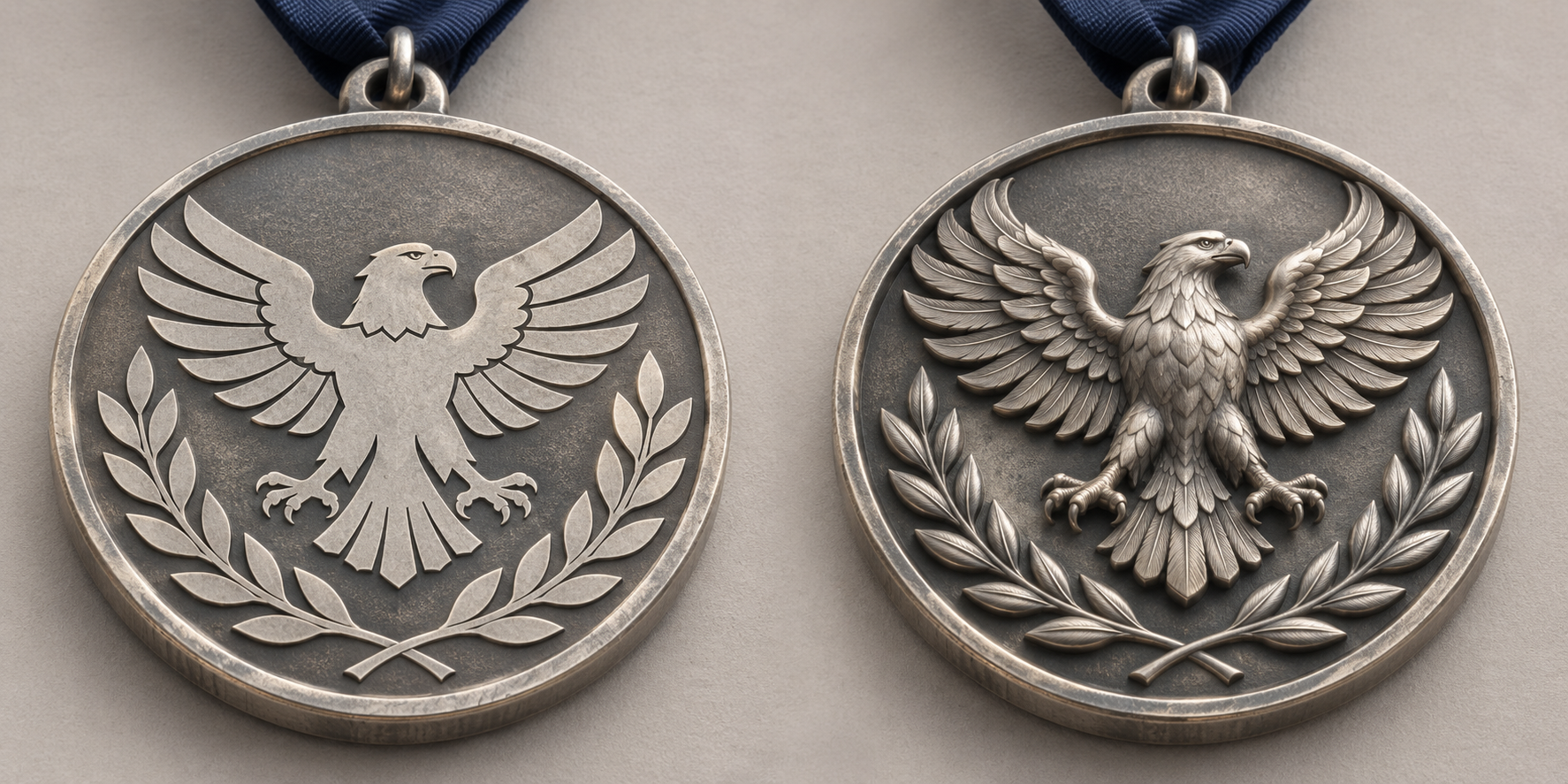
The manufacturing process is what brings your digital design to life, and your choices here are critical. A standard 2D design has raised and recessed metal lines, like a coin. It’s clean and effective for logos and text. However, a 3D design is where you can create something truly spectacular. It involves sculpting the mold to create rounded, multi-level surfaces that give depth to faces, buildings, and intricate logos. This is what elevates a medal from good to great. Plating is another key detail. Beyond the basic gold, silver, and bronze, consider an "antique" finish. This process adds a dark wash that settles into the recessed areas, making the raised details stand out dramatically. It's a simple trick that adds a look of instant sophistication and depth.
From Screen to Steel: Design Choices that Matter
Each choice adds a layer of quality and visual interest to the final product.
| Feature | Description | Best For |
|---|---|---|
| 2D Design | Flat surface with 2-3 raised levels. | Simple logos, text-heavy designs. |
| 3D Design | Sculpted, multi-level, rounded surfaces. | Portraits, buildings, intricate artwork. |
| Antique Plating | Darkened finish that enhances detail. | Complex designs needing visual depth. |
| Soft Enamel | Recessed, textured color fills. | Colorful, budget-conscious designs. |
Are You Overlooking the Ribbon and Packaging?
You spent weeks perfecting the medal design but gave no thought to the ribbon. Now you're stuck with a cheap, scratchy ribbon that feels like an afterthought and cheapens the whole award.
Confirm the ribbon's material, width, and printing method. A wider (e.g., 38mm) sublimated ribbon feels more premium than a standard, thin one. Also, decide on packaging—a simple polybag is standard, but a velvet box elevates the presentation.
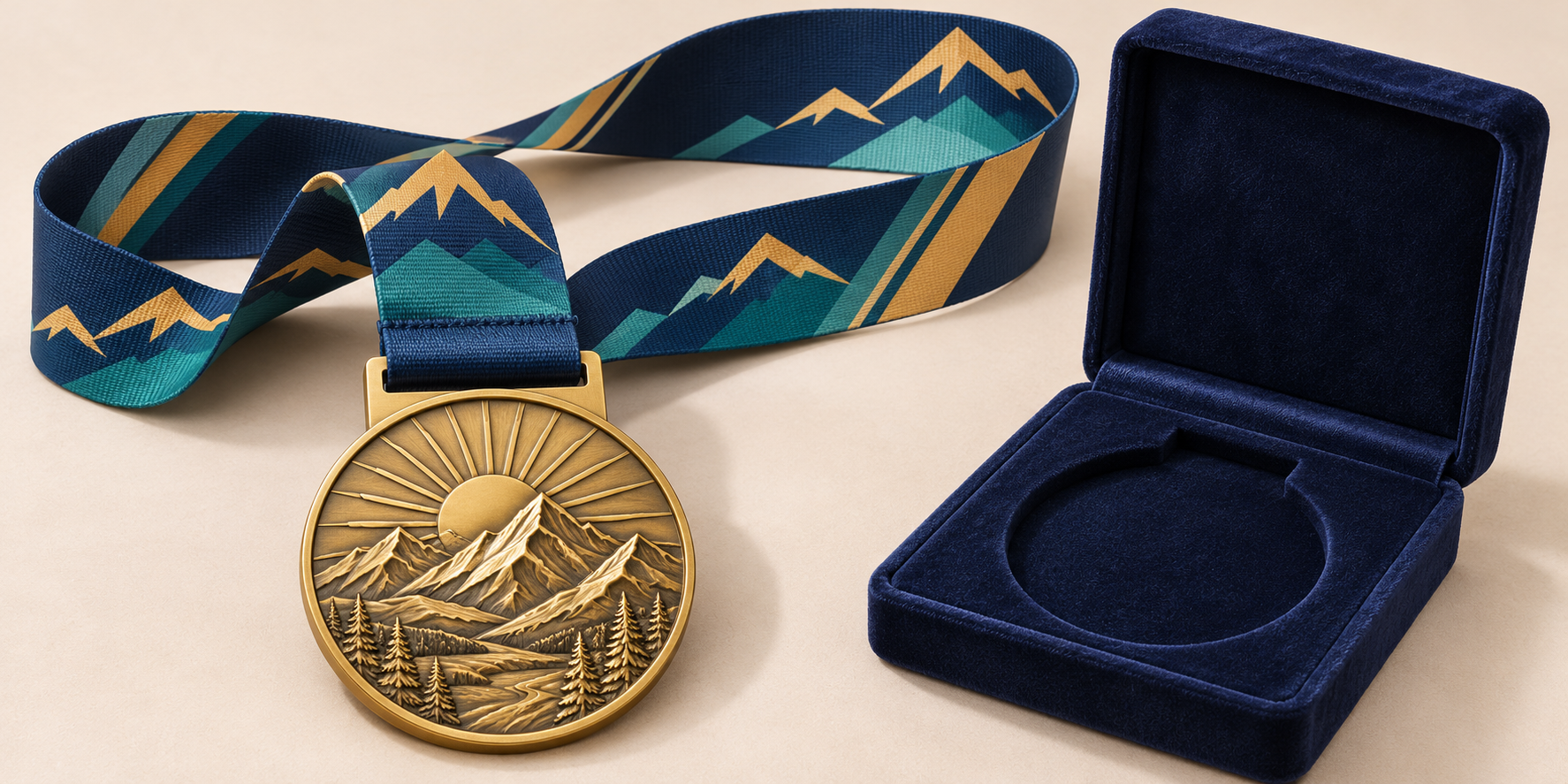
The ribbon is not just a holder; it's part of the user experience and a prime branding opportunity. A standard, 25mm wide ribbon with a simple one-color print is fine for participation medals, but for a premier event, it falls short. I always advise my clients to upgrade to a wider, 38mm ribbon. The extra width feels more substantial around the neck. More importantly, opt for dye sublimation printing. This method allows for full-color, edge-to-edge designs, so you can print logos, patterns, or event names in vibrant detail. It creates a smooth, professional finish that won't crack or fade. Finally, think about how the medal will be presented. While a polybag protects it during shipping, presenting it in a simple velvet box or pouch can make the award moment feel significantly more special.
Finalizing the Finishing Touches
These details complete the award experience.
-
Ribbon Width and Material
Go for a wider, softer polyester ribbon (30mm-38mm) for a quality feel. It costs slightly more but dramatically improves the perceived value.
-
Printing Method
Choose dye sublimation for full-color, complex designs. For simple logos, heat transfer is a good mid-range option. Avoid screen printing on ribbons as it can feel thick and crack over time.
-
Attachment
A simple V-sew is standard. For a cleaner look, ask for a loop attachment that hides the sewing behind the medal.
-
Packaging
At minimum, ensure each medal is in a polybag to prevent scratching. For top awards, a small investment in a presentation box makes a huge impact.
What Timeline and Proofs Should You Demand?
Your event is in six weeks, and the supplier says "no problem," but you have a bad feeling. A delay of even a few days could mean your medals don't arrive in time, creating a catastrophe.
Demand a clear production schedule and a digital proof for approval before mass production begins. For large or complex orders, insist on a pre-production physical sample. This is the only way to guarantee the final product matches your expectations.
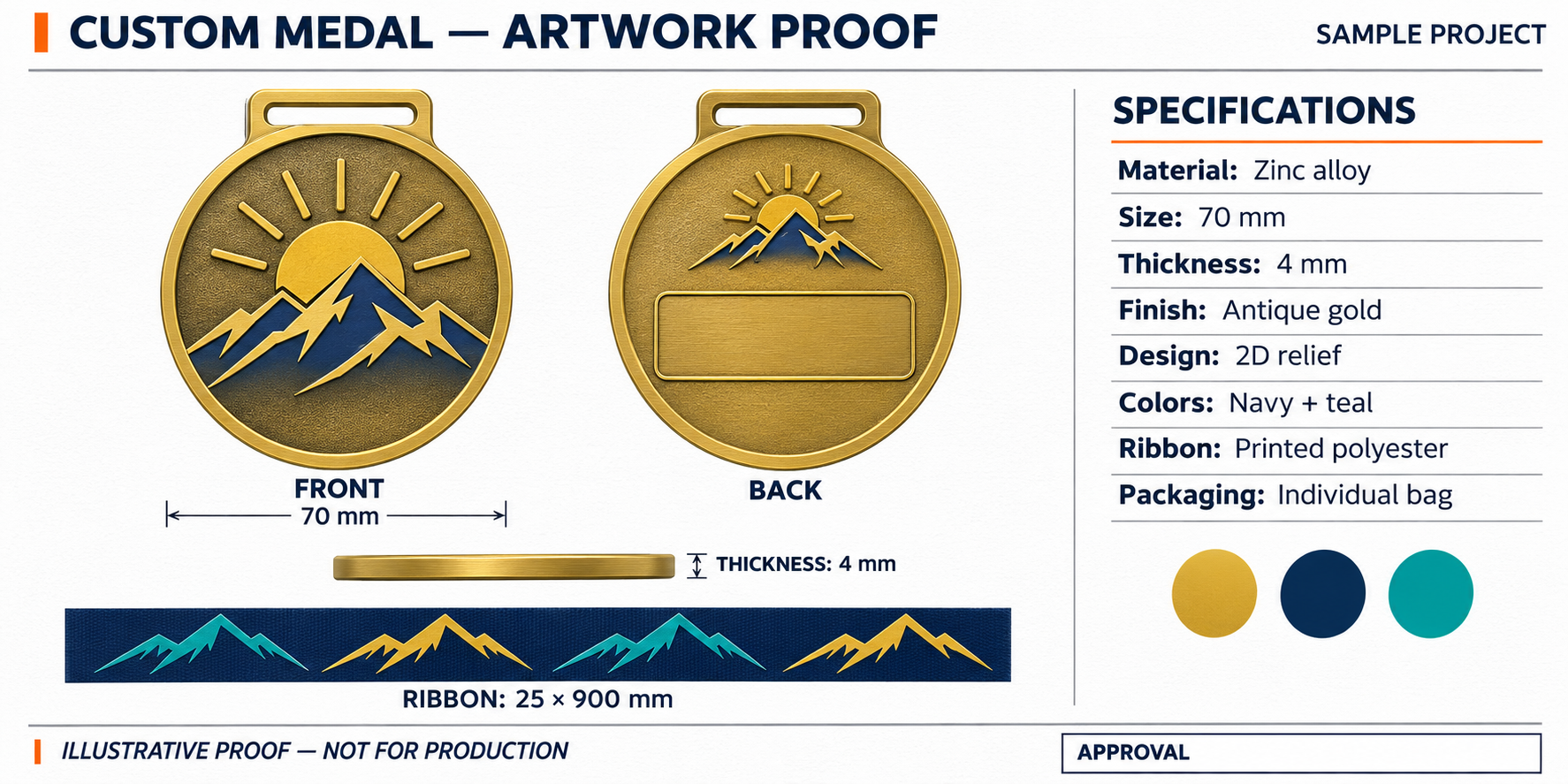
"Don't worry" is not a production schedule. You must get concrete dates from your supplier. A typical custom medal order takes 3-5 weeks for production, plus shipping time. You need to map this out on a calendar. The most critical step in this timeline is the proofing process. You must receive and approve a digital artwork proof that lays out every single detail: size, thickness, colors, plating, and ribbon design. Check it obsessively. This is your contract with the factory. For any order over 500 pieces or with a complex 3D design, I strongly recommend paying the extra fee and waiting the extra time for a physical pre-production sample. Holding the actual medal in your hands before you approve a run of thousands is the ultimate insurance policy against disappointment.
Your Production Checklist
- Digital Proof (Artwork Approval): Essential for ALL orders. Do not proceed without it.
- Physical Sample: Highly recommended for large or complex orders.
- Production Time: Get a firm completion date.
- Shipping Time & Method: Confirm if it's 3 days by air or 30 days by sea. This is a common point of confusion.
- Contingency Time: Build in at least one extra week for unexpected delays.
Never assume anything. Clear, written confirmation is your best defense against production errors and delays.
Conclusion
Confirming specs for the medal, ribbon, and timeline before ordering is crucial. This diligence ensures your final awards are cherished mementos that accurately reflect the prestige of your event and the achievement of your recipients.