Getting a quote for promotional products can be a real headache. Vague requests lead to endless emails and surprise costs, making your project fall behind schedule. Providing the right information upfront is the secret to getting a fast, accurate price.
To get an accurate promotional product quote, you must provide five key pieces of information: the exact product type, the total quantity, detailed material specifications and color, precise dimensions, and a complete file of the artwork for branding, including the number of colors and locations.
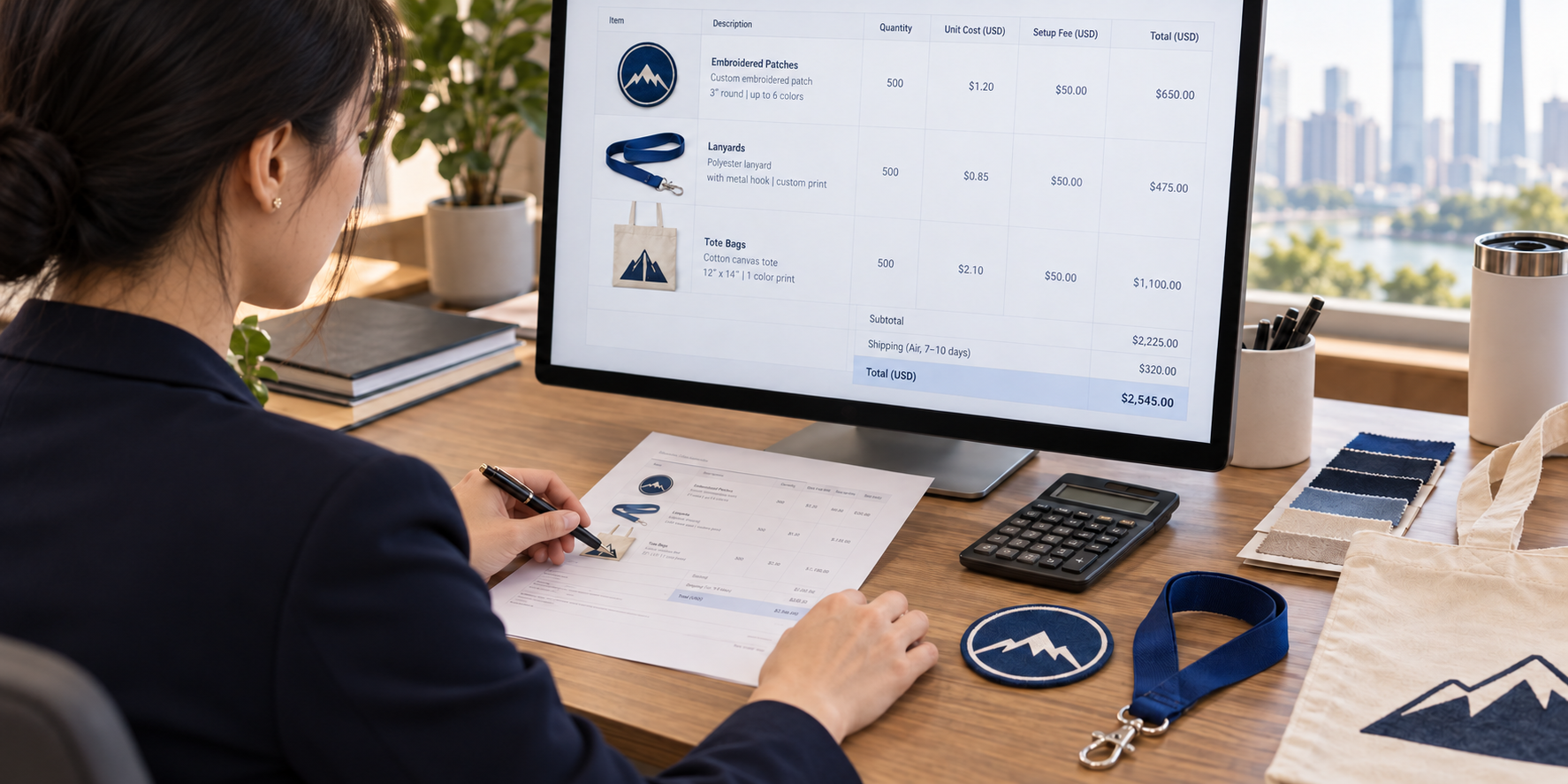
An accurate quote is more than just a number; it's the foundation for your entire project. I've seen too many projects get derailed because the initial request was too simple. I once had a client ask for "a price on 500 black t-shirts." The supplier sent back a low price based on the cheapest shirt and a one-color print. My client was actually expecting a premium, soft-style t-shirt with a complex, four-color logo. The final cost was nearly double the initial quote, and it caused a huge budget issue. A detailed request avoids all of this. It acts as a clear set of instructions, ensuring both you and your supplier are building the same thing from day one.
Why Is Providing Detailed Information So Important for Your Quote?
You send a quick email asking for a price and get a vague answer, or worse, no answer at all. This back-and-forth wastes days, and you still don't have a reliable number for your budget. A detailed request gets you a firm, actionable quote, often in hours.
Detailed information is crucial because it eliminates guesswork. It allows the supplier to accurately calculate material costs, labor, and machine time. This prevents hidden fees, speeds up the process, and ensures the price you get is for the exact product you want.
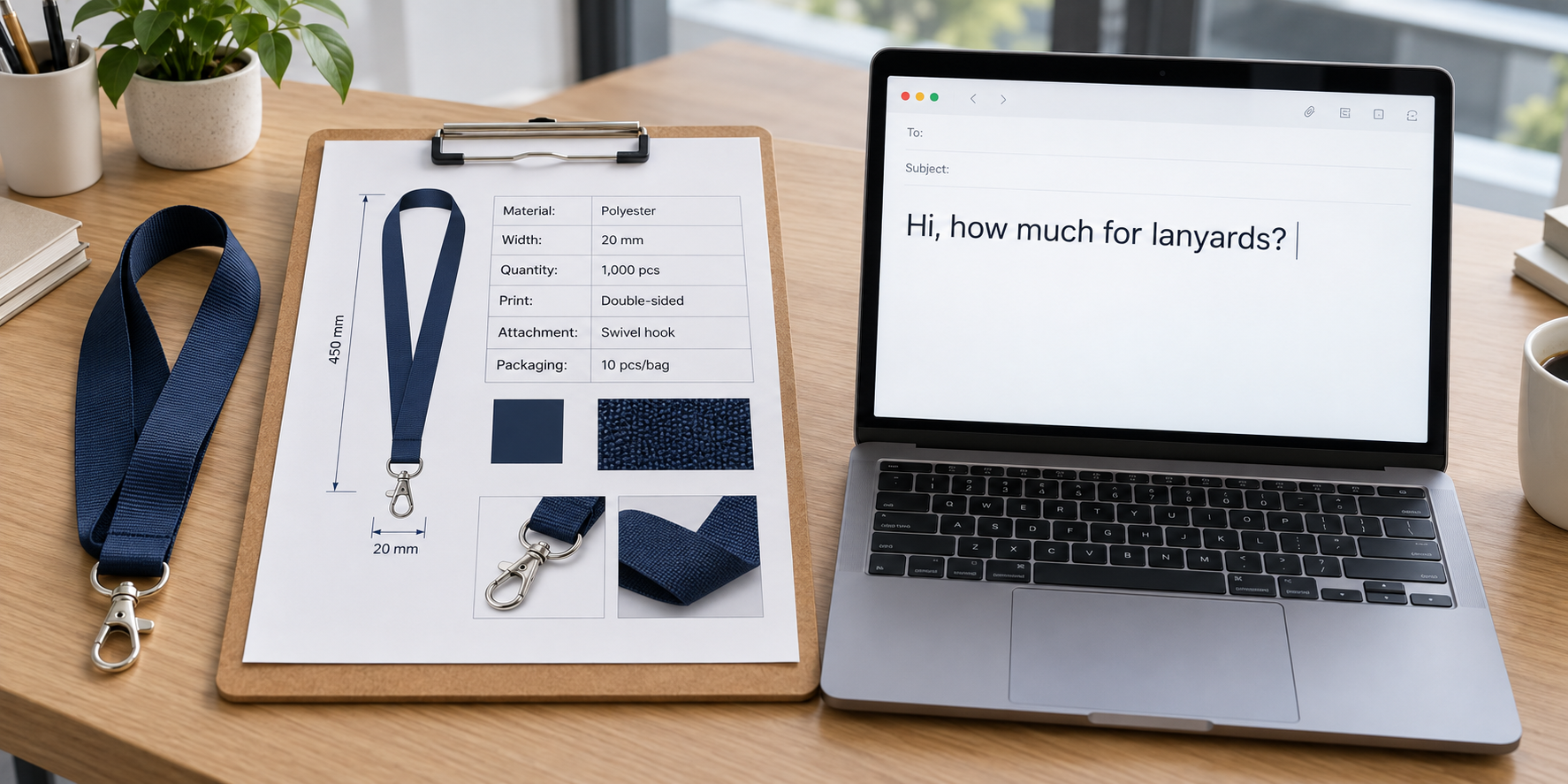
Think of it like this: asking a supplier for a quote without details is like asking a builder, "How much for a house?" They can't give you a real answer without knowing the square footage, the number of rooms, and the type of materials you want. A promotional product supplier is no different. When you provide vague information, they are forced to make assumptions. They will likely assume the cheapest options to present an attractive initial price, which is rarely what you actually need. Providing clear specifications builds trust. It shows the supplier you are a serious professional who understands the process. In my experience, suppliers prioritize these detailed requests because they know there's a much higher chance the project will move forward without issues.
The Three Core Benefits of a Detailed Request
- It Saves Time: A complete request allows the supplier to send a complete quote. This eliminates the days of back-and-forth emails asking clarifying questions.
- It Prevents Costly Errors: When every detail is written down, there is no room for misunderstanding. You get exactly what you ordered, with no surprise changes in material or quality.
- It Unlocks Better Pricing: A supplier who has all the information can provide a tighter, more competitive quote. They don't need to add a financial buffer to cover potential unknowns.
What Are the Essential Product Specifications to Provide?
You know you need 1,000 tote bags for an event, but what else does the supplier need to know? Forgetting a single detail, like the material weight or handle length, can result in a product that feels cheap or doesn't function as intended.
The essential specifications are your product's core DNA. You must always include the item name, exact quantity, material type and weight, specific color (ideally a Pantone code), and all physical dimensions. These are the non-negotiable details for any quote.
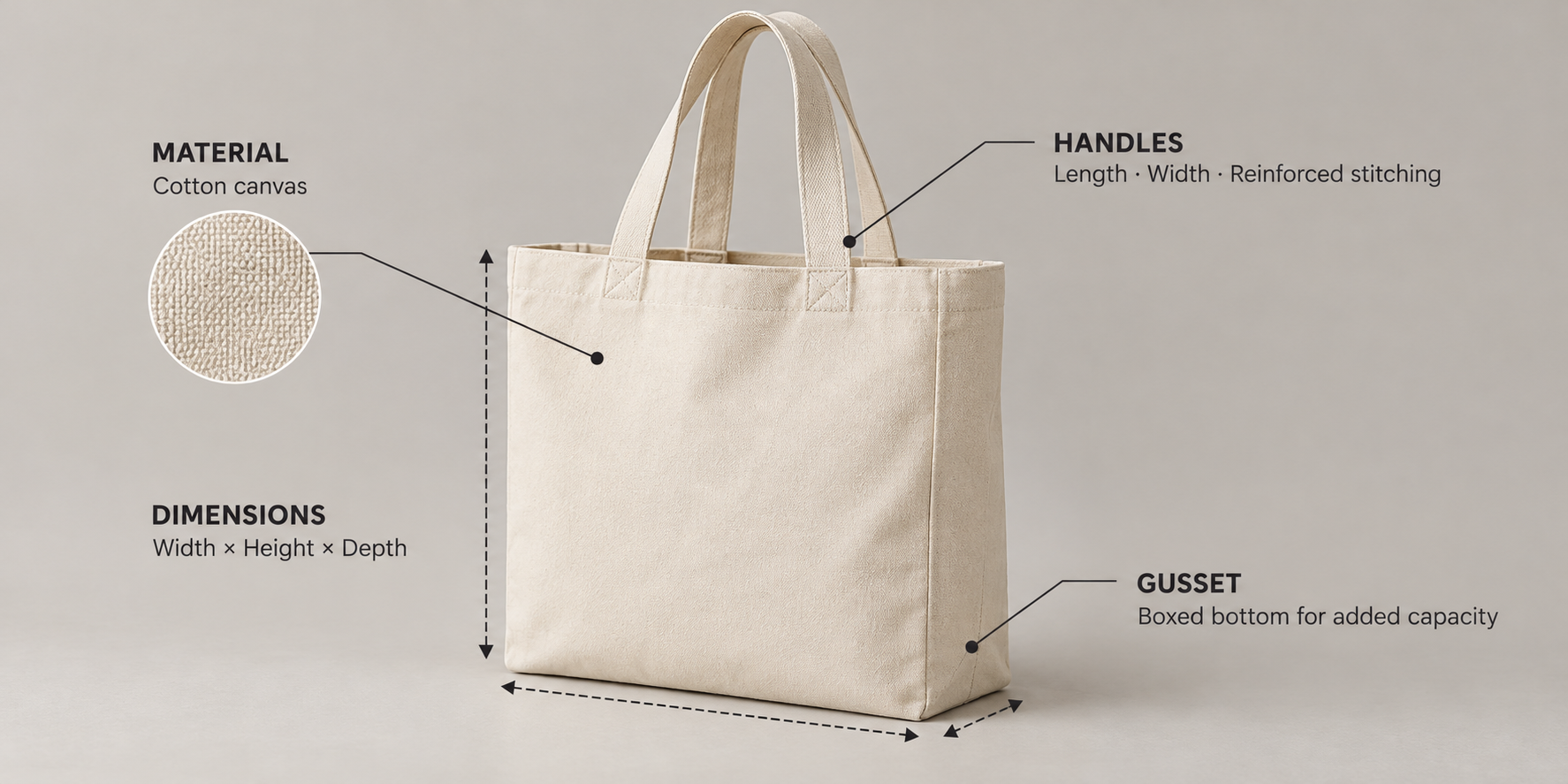
These details are the blueprint for your product. You can't leave them open to interpretation. I always create a simple "Spec Sheet" for my clients, even for the most basic products. It becomes a checklist that ensures we never miss a critical detail. For example, just saying "cotton tote bag" isn't enough. There's a huge difference between a flimsy 5oz cotton and a sturdy 12oz cotton canvas. The first feels like a cheap giveaway, while the second feels like a retail-quality product. Being specific shows that you care about quality and helps the supplier source the correct materials from the very beginning. This level of detail is what separates a professional product developer from an amateur buyer.
Example Spec Sheet: The Classic Tote Bag
| Specification | Detail | Why It Matters |
|---|---|---|
| Item | Tote Bag | Clearly identifies the product. |
| Quantity | 1,000 units | Price is highly dependent on volume. |
| Material | 12oz Cotton Canvas | Specifies durability and feel. |
| Color | Natural (Pantone 11-0601 TCX) | Ensures exact color matching. |
| Dimensions | 15" Wide x 16" High | Defines the bag's size and capacity. |
| Gusset | 3" Bottom Gusset | Adds depth and structure. |
| Handles | 24" Long x 1" Wide | Determines how the bag is carried. |
How Does Your Artwork and Branding Affect the Quote?
You sent over your company logo, but the supplier came back with a quote that's much higher than you expected. You don't understand why printing on the back costs extra or why your four-color logo is so much more expensive than a one-color version.
Branding costs are determined by four factors: the number of colors in your artwork, the number of print locations, the size of the print, and the method used. A multi-color design printed on the front and back will always cost more than a one-color design in one location.
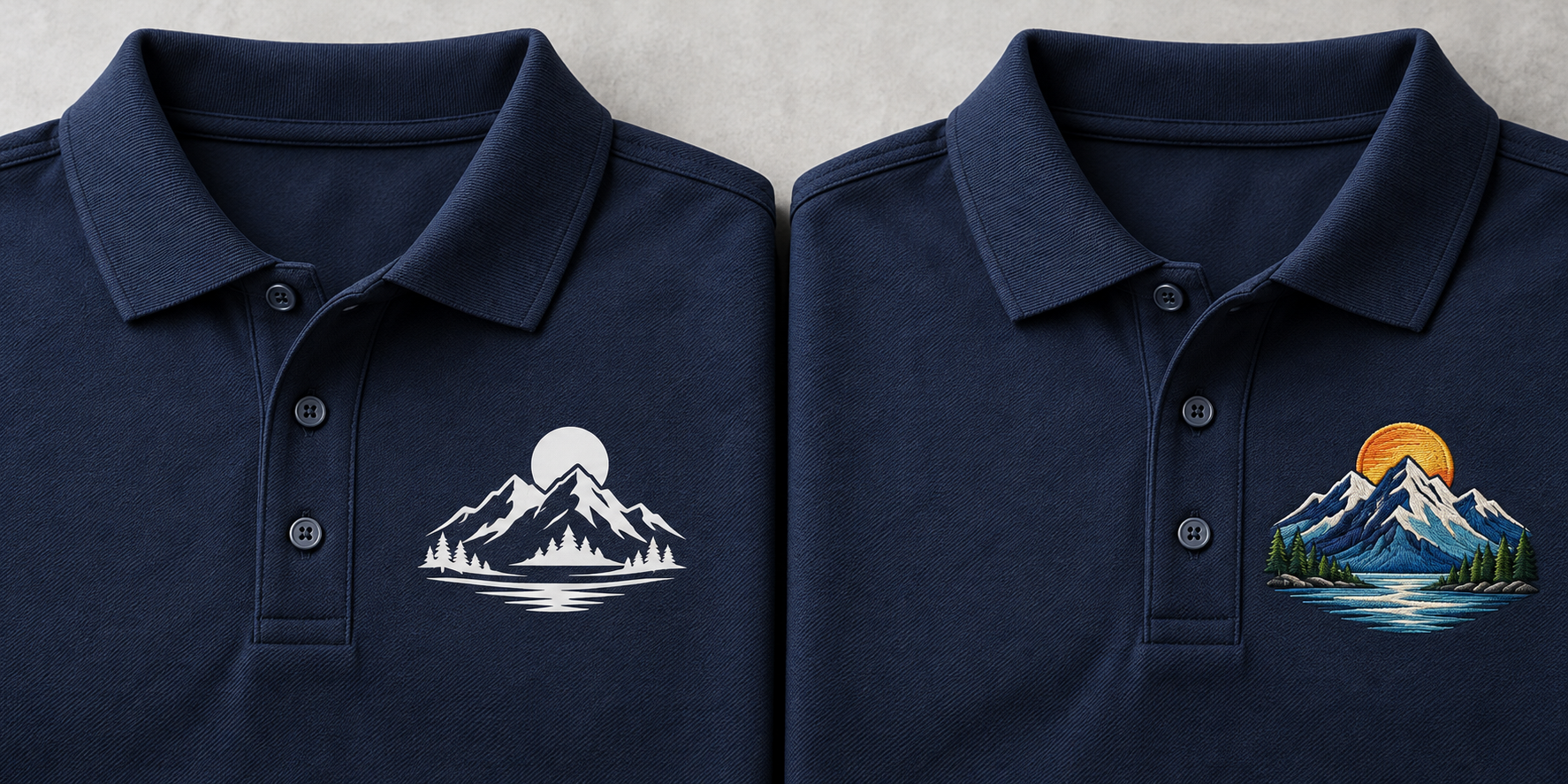
The way your branding is applied to the product is a major cost driver. It's crucial to provide your supplier with a "vector" file of your artwork (usually an .AI or .EPS file). This file type allows them to see the exact colors and scale your art without losing quality. The most common printing method, screen printing, requires a separate screen to be created for each color in your design. This is why a one-color logo is so affordable—it only needs one screen and one setup. As you add colors, you add setup costs and labor. I always advise clients to consider their budget during the design phase. If you need to keep costs down, consider creating a one-color version of your logo specifically for promotional items.
Common Branding Methods and Their Costs
| Method | Best For | Cost Factor |
|---|---|---|
| Screen Printing | T-shirts, tote bags (1-4 colors) | Low per item at high volume. Setup cost per color. |
| Embroidery | Hats, polos, jackets | High-end feel. Priced by stitch count, not colors. |
| Heat Transfer | Full-color photos, complex logos | Great for complex art. Can feel like a sticker. |
| Laser Engraving | Metal pens, water bottles | Permanent, premium look. Price based on size/time. |
Conclusion
Getting an accurate quote is not difficult. It just requires preparation. By providing clear specs, artwork, and logistics, you empower your supplier to give you a fast, fair price every time.